
Should New Testament believers keep the Feasts of the Lord?
God is strategic, poetic, and prophetic in many ways. We see this in the way that He planned the seven appointed feasts of the Lord for us. Leviticus 23 records how God gave Moses very specific instructions for each of these holy convocations, with each one prophetically pointing to Jesus some 1,400 years before His birth on earth. Passover, Unleavened Bread, First Fruits, Pentecost, Trumpets, Day of Atonement and Tabernacles do not only commemorate the Israelites’ incredible exodus from Egypt, their harvests, and prayer times. More importantly, they point to the cross and Jesus’ second coming.
(简体中文 > 新约信徒应该遵守主的节期吗? | 繁體中文 > 新約信徒應遵守主的節期嗎?)
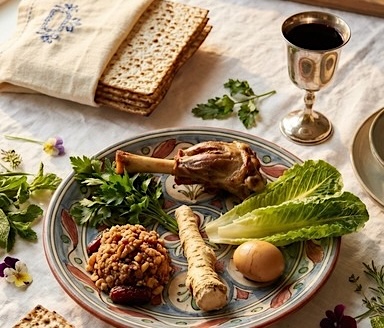
Jesus Himself said that He looked forward to celebrating the Passover feast with His disciples for His last meal with them. Passover is the first of the seven feasts and it commemorates the Israelites’ deliverance from Egypt, where a lamb was sacrificed and its blood marked the entrances of their homes, so that their firstborn would be spared from the last and final plague that fell on the Egypt (Exodus 12:1-3). Many details of the meal and the timing of Jesus’ death on the cross during Passover carry strategic messages.
Luke 22:14-16 NKJV When the hour had come, He sat down, and the twelve apostles with Him. Then He said to them, “With fervent desire I have desired to eat this Passover with you before I suffer; for I say to you, I will no longer eat of it until it is fulfilled in the kingdom of God.”
Exodus 12:1-3 NKJV Now the Lord spoke to Moses and Aaron in the land of Egypt, saying, “This month shall be your beginning of months; it shall be the first month of the year to you. Speak to all the congregation of Israel, saying: ‘On the tenth of this month every man shall take for himself a lamb, according to the house of his father, a lamb for a household… Your lamb shall be without blemish, a male of the first year. You may take it from the sheep or from the goats.Now you shall keep it until the fourteenth day of the same month. Then the whole assembly of the congregation of Israel shall kill it at twilight. And they shall take some of the blood and put it on the two doorposts and on the lintel of the houses where they eat it.
Times and days
The times of each biblical feast are determined by the lunisolar calendar, which tracks the movement of the moon and is adjusted to synchronise with the solar year. Biblical months begin with the visible sighting of the new crescent moon. (This is why there are new moon festivals mentioned in Numbers 10:10, Isaiah 1:14, Colossians 2:16.) Hence, the dates for the feasts vary from year to year.
Biblical days begin at dusk when the sun goes down, not at midnight. When Jesus celebrated Passover at dusk, it was already the beginning of a new day.
Genesis 1:14 NKJV Then God said, “Let there be lights in the firmament of the heavens to divide the day from the night; and let them be for signs and seasons, and for days and years;
Daytime in the Bible is divided into 12 hours, beginning at sunrise, which is around 6am. From this understanding, we see that Jesus was crucified around 9am (third hour) and died around 3pm (ninth hour) – before the next day began at dusk. The ninth hour is also when Passover lambs were sacrificed in the Temple. By choosing this time for His Son’s death, God was poetically connecting the slaughter of the Passover Lamb to the death of Jesus, the Lamb of God.
Mark 15:25 NKJV Now it was the third hour, and they crucified Him.
Mark 15:34 NKJV And at the ninth hour Jesus cried out with a loud voice, saying, “Eloi, Eloi, lama sabachthani?” which is translated, “My God, My God, why have You forsaken Me?”
John 1:29 NKJV The next day John saw Jesus coming toward him, and said, “Behold! The Lamb of God who takes away the sin of the world!
Later, the first healing miracle in Jesus’ name occurred also occurred at the ninth hour. In Acts 3:1-8, we see that Peter and John “went up together to the temple at the hour of prayer, the ninth hour” and said “In the name of Jesus Christ of Nazareth, rise up and walk” to a man who was lame from birth. He was instantly healed. It was also the ninth hour that an angel appeared to the first Gentile, a centurion called Cornelius, to orchestrate a series of events so that he and his household could receive the Holy Spirit and be saved through Jesus Christ. These are some examples of details in scripture that God uses to subtly point us to Jesus.
Acts 10:3 NKJV About the ninth hour of the day he saw clearly in a vision an angel of God coming in and saying to him, “Cornelius!”
Luke 24:27 NKJV And beginning at Moses and all the Prophets, He expounded to them in all the Scriptures the things concerning Himself.
All nations present to witness God’s new covenant at the Feasts
God ordained the Feasts as a statute for His people to follow and promised them that when they kept the sacred feasts, He would bless the work of their hands. As part of this law, all Hebrew men had to go to the Temple in Jerusalem for three major feasts; Unleavened Bread and Pentecost in the spring, and the Feast of Tabernacles in the fall.
Deuteronomy 16:15 NKJV Seven days you shall keep a sacred feast to the Lord your God in the place which the Lord chooses, because the Lord your God will bless you in all your produce and in all the work of your hands, so that you surely rejoice.
Leviticus 23:41 NKJV You shall keep it as a feast to the Lord for seven days in the year. It shall be a statute forever in your generations.
The Lord strategically arranged it this way so that men “from all nations” would be in Jerusalem for two very significant events; His Son’s crucifixion and resurrection (Unleavened Bread) and the outpouring of the Holy Spirit (Pentecost). Scholars estimate that between four and five million Jews lived outside of Judea and Galilee during Jesus’ time. This meant that more Jews lived in the diaspora than in their homeland. God, in His grace and foreknowledge, made sure they would not be left out of the good news by ordaining that they should be in Jerusalem on those dates.
Men “from every nation under heaven” were there to hear about the disciples speaking in tongues for the first time at Pentecost (Acts 2:5-12). On that same day, the apostle Peter boldly preached the gospel through the power of the Holy Spirit and 3,000 men repented to follow Jesus (Acts 2:38-41). That day, at that feast, the apostle Peter became the fisher of men that Jesus had promised (Mark 1:17) and the church was birthed on Pentecost.
Exodus 23:14–17 NKJV “Three times you shall keep a feast to Me in the year: You shall keep the Feast of Unleavened Bread (you shall eat unleavened bread seven days, as I commanded you, at the time appointed in the month of Abib, for in it you came out of Egypt; none shall appear before Me empty); and the Feast of Harvest, the firstfruits of your labors which you have sown in the field; and the Feast of Ingathering at the end of the year, when you have gathered in the fruit of your labors from the field. “Three times in the year all your males shall appear before the Lord God.
Acts 2:5-12 NKJV And there were dwelling in Jerusalem Jews, devout men, from every nation under heaven. And when this sound occurred, the multitude came together, and were confused, because everyone heard them speak in his own language. Then they were all amazed and marveled, saying to one another, “Look, are not all these who speak Galileans? And how is it that we hear, each in our own [c]language in which we were born? Parthians and Medes and Elamites, those dwelling in Mesopotamia, Judea and Cappadocia, Pontus and Asia, Phrygia and Pamphylia, Egypt and the parts of Libya adjoining Cyrene, visitors from Rome, both Jews and proselytes, Cretans and Arabs—we hear them speaking in our own tongues the wonderful works of God.” So they were all amazed and perplexed, saying to one another, “Whatever could this mean?”
Acts 2:38-42 NKJV Then Peter said to them, “Repent, and let every one of you be baptized in the name of Jesus Christ for the remission of sins; and you shall receive the gift of the Holy Spirit. For the promise is to you and to your children, and to all who are afar off, as many as the Lord our God will call.” And with many other words he testified and exhorted them, saying, “Be saved from this perverse generation.” Then those who [m]gladly received his word were baptized; and that day about three thousand souls were added to them.
Should believers celebrate the Feasts?
Jesus never said we should abolish the Feasts. Instead, He said, “Do not think that I came to destroy the Law or the Prophets. I did not come to destroy but to fulfill.” (Matthew 5:17 NJKV) The apostle Paul even told the Corinthian believers, “let us keep the feast…” (1 Corinthians 5:8).
While the apostle advised new believers not to let anyone judge them based on their observance of the feasts or not (Colossians 2:16-17), we see that Paul himself made a very real point to keep the feasts on a number of occasions:
- Passover – Paul shared Passover with the Corinthian church (1 Corinthians 5:7-8)
- Unleavened Bread – Paul intentionally sailed to Troas to observe this feast, spending seven days with the believers there (Acts 20:6)
- Pentecost – Paul hurried back to Jerusalem to keep this feast (Acts 18:20-21)
- Day of Atonement – Paul is recorded as finishing the fast for this feast even while sailing on a boat (Acts 27:9)
Colossians 2:16-17 NKJV So let no one judge you in food or in drink, or regarding a festival or a new moon or sabbaths, which are a shadow of things to come, but the substance is of Christ.
Acts 18:20-21 NKJV When they asked him to stay a longer time with them, he did not consent, but took leave of them, saying, “I must by all means keep this coming feast in Jerusalem; but I will return again to you, God willing.” And he sailed from Ephesus.
The prophet Zechariah prophesied that there would come a time when all nations would “go up from year to year to worship the King, the Lord of hosts, and to keep the Feast of Tabernacles” (Zechariah 14:16). This annual feast is not limited to the nation of Israel but will include all nations.
Every culture, religion, and tribe holds annual festivals to celebrate their own gods and spirits. The Chinese honour their ancestors during Ching Ming festival. The Hindus celebrate various deities during the Festival of Lights. The Muslims have Eid al-Fitr & Eid al-Adh to honour Allah. The Buddhist have Vesak Day for Buddha. Even Halloween honours spirits of the dead.
None of these other gods have died for their people, given themselves up for them, promised them power and authority, filled them with unspeakable love, or will personally come back to usher them into eternity in heaven. The Feasts of the Lord celebrate the one true God who has done this and will do more for us. What is there to hold us back from celebrating them – especially since some of the occasions Christians celebrate are actually more pagan in nature than biblical? For example, see Is Easter biblical?
Revelation 15:4 NKJV Who shall not fear You, O Lord, and glorify Your name? For You alone are holy. For all nations shall come and worship before You, For Your judgments have been manifested.
A summary of the seven Feasts of the Lord
A believer’s salvation is marked by the Spring Feasts (March/April/June, 50 day period)
| Spring Feasts | Fulfilment in Jesus | ||
| 1. Passover (Leviticus 23:5) | Commemorates the Israelites’ deliverance from Egypt, where the blood of a lamb saved them from the angel of death. | Jesus was sacrificed on the cross as our spotless lamb. The blood He shed was for the new covenant. | 1 Corinthians 5:7 NKJV Therefore purge out the old leaven, that you may be a new lump, since you truly are unleavened. For indeed Christ, our Passover, was sacrificed for us. |
| 2. Unleavened Bread (Leviticus 23:6) | A seven-day period of eating bread without leaven, symbolising the removal of sin from daily life. | Jesus lived a sinless life and was buried without decay. | 1 Corinthians 5:8 NKJV Therefore let us keep the feast, not with old leaven, nor with the leaven of malice and wickedness, but with the unleavened bread of sincerity and truth. |
| 3. Firstfruits (Leviticus 23:9–14) | The offering of the first sheaf of the barley harvest to God, to acknowledge His provision. | Jesus resurrected on this day, becoming the “firstfruits” of the resurrection of the dead. | 1 Corinthians 15:20 NKJV But now Christ is risen from the dead, and has become the firstfruits of those who have fallen asleep. |
| 4. Pentecost / Feast of Weeks (Leviticus 23:15-22) | Celebrated 50 days after Firstfruits; celebrating the giving of the Torah at Mount Sinai. | The Holy Spirit was poured out on the disciples, He will write God’s law on people’s hearts. With 3,000 new converts, the church was born. |
Hebrews 8:10 NKJV For this is the covenant that I will make with the house of Israel after those days, says the Lord: I will put My laws in their mind and write them on their hearts; and I will be their God, and they shall be My people. |
Jesus’ return is marked by the Fall Feasts (September or October, 22-23 day period)
| Fall Feasts | Fulfilment in Jesus | ||
| 5. Feast of Trumpets (Leviticus 23:23–25) | Marks the New Year, characterised by the blowing of the shofar (ram’s horn) to call people to repentance and prepare for judgment. | Jesus will return in the clouds and gather His elect, with a loud trumpet blast. |
1 Corinthians 15:51-52 NKJV Behold, I tell you a mystery: We shall not all sleep, but we shall all be changed— in a moment, in the twinkling of an eye, at the last trumpet. For the trumpet will sound, and the dead will be raised incorruptible, and we shall be changed. |
| 6. Day of Atonement (Leviticus 23:26–32) | The holiest and most solemn day of the year, involving fasting and prayer to seek forgiveness and atone for corporate sins. The High Priest would enter the Holy of Holies to cleanse the people of sin. | Jesus will judge all peoples, eradicate all who have not repented, and restore the remaining to eternal unity with God the Father. | Hebrews 9:28 NKJV so Christ was offered once to bear the sins of many. To those who eagerly wait for Him He will appear a second time, apart from sin, for salvation. |
| 7. Feast of Tabernacles (Leviticus 23:33–44) | A week-long, joyful harvest festival commemorating God’s provision during the desert wanderings, characterised by great rejoicing and gratitude. | Jesus will return to “tabernacle” (dwell) with mankind and reign on earth for 1,000 years. |
Revelation 21:3 NKJV And I heard a loud voice from heaven saying, “Behold, the tabernacle of God is with men, and He will dwell with them, and they shall be His people. God Himself will be with them and be their God. |
May this sharing be a blessing to you as you seek to love the Lord with all your heart and observe all that He has called us to.